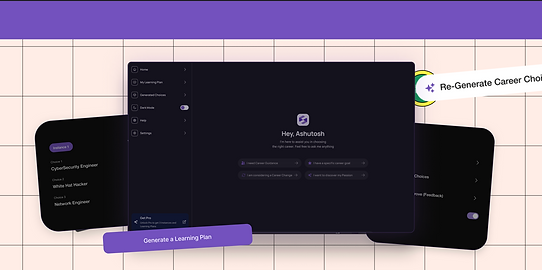
Empowering Farmers, Simplifying Tractor Management
Building for
Bharat
AGRI - TECH DESIGN
AgriTech is a term used for agricultural technology, which involves the use of technology to improve farming and agriculture across different value chains.

Sarthi
PRODUCT STATEMENT
Sarthi is an all in one Tractor rental management app designed for Indian farmers, integrating advanced GPS tracking for tractors with digital ledger (Udhar Bahi Khata) that connects to Sarthi IOT kit.
It enhances farm productivity by ensuring timely fieldwork, accurate financial record-keeping, and providing the latest agricultural news and updates.
The system
The architecture outlines how various components and data flows interact within the IoT ecosystem for effective tractor monitoring and management.

Uses cellular connectivity (4G/5G) or LPWAN (such as LoRa) to transmit data to the cloud server.
Connected to the tractor battery for power
%201.png)
Includes sensors, wiring harnesses, microcontrollers ( Fuel sensor, RPM sensor ) and a GPS module.
Executes calculations on incoming data
Receives data from the IoT device. The server processes and stores data for further analysis.
.png)
Application Layer
Connected to the cloud and provides a platform to access data
Solution
Showcase
HOW I THOUGHT THINGS THROUGH

DOMAIN
India's economy is largely Agrarian

Agriculture is one of the largest contributors to India's economy accounting for ~20% GVA* annually exhibiting a steady growth of 10% p.a. over the past 5 years.
Impact of Landholding on Farmers

Only households with landholding more than 2 hectares have positive net incomes with favourable returns on capital employed.
A large share of income for farmers with less than 2 hectares comes from non-farming sources (labour, gig economy, etc.)
HOW CAN WE LEVERAGE TECHNOLOGY WHILE DESIGNING SOLUTIONS FOR FARMERS?

Area of
Intervention
AgriTech startups in India have been termed as the “ray of hope”, driving innovation and transforming the way agriculture is traditionally done in India. Here are some of the areas where AgriTech startups are making a difference.
Source: Blume Ventures
Precision Farming
Online Marketplaces
Data-Driven Farming Solutions

Supply Chain Technology
Machine-Based Quality Management
Data-Driven Farming Solutions empower farmers to make informed decisions, improve resource efficiency, and boost productivity, resulting in higher profitability and sustainable practices.
Brief
Many small-scale farmers with less than 2 hectares of land rely significantly on non-farming sources of income, facing difficulties in making agriculture a viable and sustainable livelihood. The objective is to identify ways to improve their agricultural income, addressing challenges related to resource inefficiency, low productivity, and financial instability.
User Centric Approach
Before diving into designing solutions, it’s crucial to understand the specific demographic and regional diversity of Indian farmers we aim to serve. These farmers are often part of the "Next Billion Users"—a group that includes individuals who may not be highly educated, speak primarily regional languages, and whose families have below-average or average incomes.
Designing for this demographic requires a hyper-localized approach that respects their unique needs and cultural contexts.
In India, dialects, traditions, and farming practices change every few kilometers, which poses a significant challenge in creating one-size-fits-all solutions. The first step in designing effective solutions is understanding these users deeply—embracing the nuances of their everyday lives, overcoming language barriers, and developing highly tailored tools that fit their context.
For whom
How
Why
Objective

Designing for Indian Farmers
India's Next Billion Users Initiative
Designing for next billion users
Not just a business opportunity
2016 was a revolutionary year for us Indians. You guessed it right the Jio wave democratized the internet connection, and thanks to that Now we are the second-largest internet users in the world.
Indian internet users can be divided into two categories — India & Bharat.

consists of people who are not well educated, speak regional languages, and they/family have a below-average or average
_edited.png)
About the
Next Billion Users
PRIMARY RESEARCH METHOD
Understanding Indian Farmers
I drafted 40 interview questions. They were a combination of open and close-ended questions related to a farmer’s lifestyle and our products.
The end goal was to understand how much a farmer’s lifestyle is digitally integrated and which parts of the work are still traditionally done and the reasons behind those decisions.


The Learnings
The following data is a combination of qualitative data which I collected doing user interviews and quantitative data from exsisting IoT devices and mobile apps.
Top applications used
by our Next Billion Users
YouTube should have topped here though we are considering the apps that are used and installed by farmers and not considering YouTube as it is a default Android app.
If you see the list most of these or at least a few of them are used by every smartphone owner, Whatsapp being the most used one. Internet is blurring the line between cities & villages. Indian apps like Sharechat are gaining a strong share in the interiors of India.
_edited.png)


_edited.png)
_edited.png)


Quantifiable Learnings

About
the users
Nearly 86% of India's farmers are small and marginal farmers with land holdings below two hectares.
We conducted interviews with potential users to understand their stories, needs , and fears. Here’s what we found:
Users favor concise, straightforward content that meets their immediate needs.
Users spend less time consuming detailed information and prefer content that is straightforward, easy to grasp, and directly beneficial to their immediate needs.
They engage more with visual and interactive materials, such as tools for calculating rental costs, monitor their tractors.
They engage better with content that offers immediate, tangible benefits, such as interactive tools to calculate rental costs or visually rich guides on using the machinery.
TRACTORS & INDIA
Tractors are essential to Indian agriculture, saving labor, reducing time, and increasing crop yields.
150 Million Farmers,
Only 4 Million Can Afford Tractors
WHY RENTING TRACTORS ?
Despite being one of the largest tractor markets globally, the purchasing patterns of farmers across the country are influenced by numerous factors.
The Predicament of Tractor Ownership
Financial Barriers and the Role of Credit
Fragmented Landholdings: A Major Hurdle
Renting: The Preferred Solution for Many
Analysing the
users
FINDINGS
What the participants had to say:
To understand users' habits, expectations, and frustrations we conducted some interviews to get each of their unique stories. Here are some things that stood out:

User Segmentation
Based on the interviews, I categorized farmers according to their landholdings and characteristics;
Small and Marginalized Farmers
Less than 2 hectares
-
Owns one tractor, typically purchased through government subsidy schemes.
-
Renting out tractors accounts for 15-20% of their annual income. These farmers use the tractor for their own farm but rent it out when not in use to supplement their income.
-
They have limited resources and rely heavily on the additional income from renting out their equipment.
Medium Scale Farmers
2 - 8 hectares
- Owns more than one tractor, with at least one tractor available for rentals at any given time.
- Tractor rentals make up about 40% of their income. They do not rely solely on government schemes and often invest in equipment independently.
Farmers renting Tractors
Less than 1 - 1.5 hectare
-
Spends around 50% of their income on renting tractors.
-
These farmers cannot afford to buy tractors, even with government subsidies, and rely heavily on rental equipment for their farming activities.
PRIMARY USER PERSONA
Understanding our
Users

Rakesh Patel | 42
Adas, Gujarat
Education: 10th grade pass | Married, with two children
Rakesh is a dedicated farmer with a 5-acre farm where he grows tobacco and castor oil. To boost his income, he rents out his tractor, which contributes 30-50% to his annual earnings. Although he has limited formal education, he uses a smartphone and apps like WhatsApp to manage his work, but he sometimes struggles with technology.
"I am usually very busy. I spend most of my time in the farms, supervising my workers and meeting new people. Often I hear about new govt schemes and apps there and take help of my kids to install these apps. Though most of the time I ignore using these apps as I don't understand them and they feel sophisticated."
Goals & Needs
-
To monitor his tractor’s live location and ensure it is being used responsibly by renters.
-
To track fuel consumption and ensure there’s no diesel theft.
-
To manage his earnings and calculate his profit margins efficiently, without complex paperwork.
-
To know exactly what kind of work his tractor is being used for on the farm, including the type of farming tasks performed.
-
To bill renters accurately based on real-time tractor usage.
-
To maintain and track his tractor’s service records easily.
Frustrations
-
“When I rent my tractor out, I often don’t know what’s happening with it.
-
“I am constantly worried about diesel theft, which costs me at least Rs.5,000-10,000 monthly per tractor.”
-
“It’s difficult to calculate my profits because my expenses and income are scattered across different records.”
-
“The renters sometimes misreport the area plowed, which results in confusion about the exact billing amount.”
Personality
Introvert
Extrovert
Busy
Time Rich
Messy
Organised
Motivations
Incentives - 50%
Fear - 10%
Power - 90%
Social - 60%
6

Suresh Panchal | 33
Sanand, Gujarat
Education: 8th grade pass | Married, with one children
Suresh has been in the tractor rental business for over 15 years. He inherited one tractor from his father and gradually expanded his fleet to three tractors over the years. He primarily rents them out to farmers in nearby villages.
-
"I have multiple tractors which are used based on the type of work. I pay advances to my drivers. I am a member of Krishi kendra, hence I keep trying new apps and technology and share it with my group if I see the results. I get to know about these technology via Krishi kendra, YouTube and I am open to small experiments."
Goals & Needs
-
Adopt a digital system to maintain better financial records and improve transparency.
-
Increase tractor rental frequency and decrease idle periods through effective marketing and planning.
-
Learn effective strategies for fleet maintenance to reduce repair costs.
-
Gain access to a steady flow of customers to pay off his loan faster.
-
Adopt digital tools that can help manage bookings, payments, and financial planning.
Frustrations
-
"I often face delays in payments from farmers. Some renters fail to settle dues on time, creating challenges in managing income flow."
-
"Maintenance of my tractors is a recurring problem due to frequent breakdowns. Kisan Bhai generally don't use it cautious/y."
-
"Though I use digital payments, most of my customers prefer cash transactions, making it hard for me to shift completely to digital bookkeeping."
Personality
Introvert
Extrovert
Busy
Time Rich
Messy
Organised
Motivations
Incentives - 30%
Fear - 40%
Power - 80%
Social - 90%
3


Ravindra Rathod | 40
Adas, Gujarat
1
Education: 2nd pass | Married, with four children
My tractors are used for transportation of reti. We do have off season. My friends have an accounting team but I do it by myself using the receipts I get from the company. I don't spend much time on my phone. I use my phone to watch videos and connect with friends and family.
"My day starts early in the morning at 6. I spend most of my time in the farms and evening with my friends at bazar. Often I hear about new govt schemes and apps there and take help of my kids to install these apps. Though Most of the time I ignore using these apps as I don't understand them and they feel sophisticated."
Goals & Needs
-
Increase the efficiency of rental operations to boost profit.
-
Adopt technology that can help in monitoring tractor usage, but without overwhelming complexity.
-
To communicate quickly with tractor owners about payment, scheduling, and service needs.
Frustrations
-
"The pressure of repaying my loan forces me to take any available rental opportunity, sometimes at a loss."
-
"I find it hard to build a strong customer base."
-
"I struggle to understand how to set the right rental prices and manage my tractor's maintenance schedule efficiently."
Personality
Introvert
Extrovert
Busy
Time Rich
Messy
Organised
Motivations
Incentives - 30%
Fear - 80%
Power - 30%
Social - 45%
Stakeholder mapping
.png)
Core
Tractor Owners
Tractor Renters
Sarthi Platform Users
Family of Tractor Owners
Tractor Operators/Drivers
Local Dealers/Mechanics
Agricultural Consultants

INTERNAL STAKEHOLDERS
EXTERNAL STAKEHOLDERS
.png)
Government Agencies
Insurance Companies
Financial Institutions
Technology Providers (IoT)

SYSTEMS MAP

L1
L2
L3
L4

Challenges observed with the
current way of renting tractors
The current tractor rental business, particularly in rural and semi-urban areas, typically operates through informal channels and word-of-mouth networks.
REDEFINED BRIEF
Problem Statement
What
The current tractor rental management process for small rental businesses and farmers lacks transparency and real-time monitoring, leading to issues such as unauthorized tractor usage, fuel theft, and inefficient account tracking. These challenges make it difficult for owners to manage their assets effectively, while renters face uncertainties regarding equipment availability and billing accuracy, resulting in operational delays and financial losses.
To improve this experience, we need a user-centered system that provides clear tracking, fuel monitoring, and seamless communication between tractor owners and renters, addressing the inefficiencies in the existing manual processes.
Why

THE CHALLENGE
Now imagine designing a product for 50% of the workforce of the country
How might we encourage behavior change and adoption of fleet / tractor management technology among users who are accustomed to traditional methods like khatabooks?
SYSTEM IDEATION
Key Metrics
Based on the Key Metrics required for the MVP, system architecture was decided.

I created the solution in mainly three stages.
(with a couple of more intermediary steps)
Feature Ideation
Brainstorming through all types of designs, and ideas to see what sticks and is viable.
Working on viable options from the 1st step:
Taking the viable ideas and making several prototype versions to get feedback on them, from potential users.
Fine-tuning the final prototype to perfection:
Combining the best parts from all the design versions and refining them from the feedback to bring the final design to life.
STAGE 1 OF 3
Exploring ways to approach the solution.
In the ideation phase for Sarthi, I focused on finalizing features that would be both intuitive for users and capable of scaling as business needs grow. Here are some core ideas:
Real-time tractor tracking with speed, fuel monitoring.
Accounts management with daily, weekly, and monthly views.
Driver details, payments, and utilization tracking.
Customizable dashboard for reports and insights.


STAGE 3 OF 3
Solving problems, getting feedback, refining rough edges.
Main things I did in this stage:

I created the entire solution by designing one section at a time.
I designed each section by focusing on the problems that a user might face from existing solutions.
I created each feature after prioritizing it based on how much it affected the overall UX.
I gathered feedback from usability studies on each section after designing it and refined it before moving to another one.


SOLUTION SHOWCASE
And finally,
say hello to
Sarthi.
Are you listening to your tractor?

USE CASE SCEANRIO

Karsandas and His Tractor, Shambhu
User: Karsandas, a farmer from Kheda, Gujarat, owns a tractor named Shambhu. He rents it out to other farmers during peak seasons to generate extra income.
Goal: Karsandas wants to ensure that his tractor is well-maintained, monitor fuel usage, and prevent any misuse by hired drivers.

.png)

Getting Started with the Sarthi App
LANGUAGE SELECTION
Users are presented with a variety of language options (English, Hindi, regional languages) to choose their preferred language.
Helps ensure the app is accessible to farmers across different parts of India.
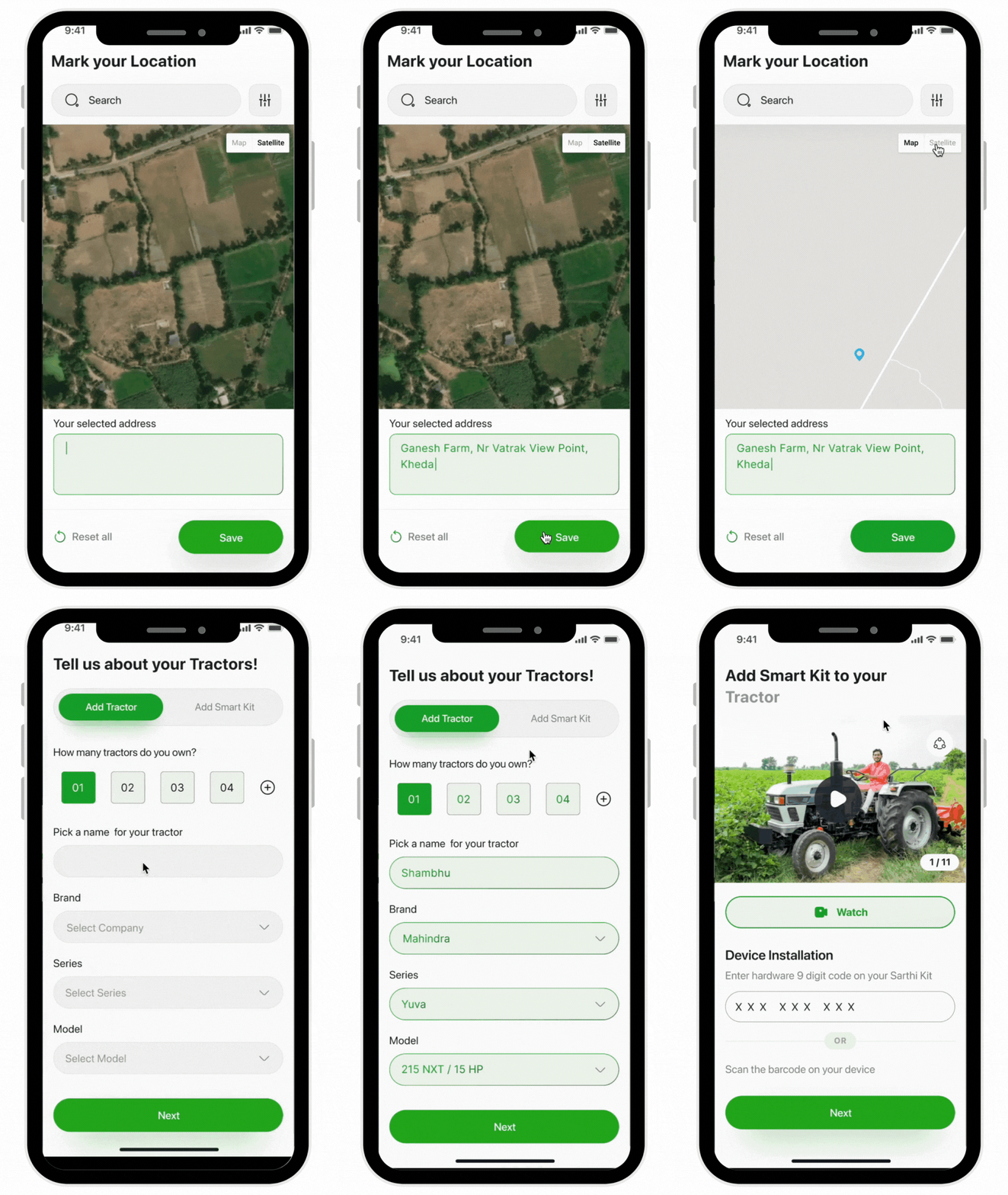
TRACTOR DETAILS
After onboarding and adding his location, Karsandas shares details about his tractor—brand, model, series—and names it Shambhu for a personal touch.
Personalize your experience by your tractor a nickname! ✨
INTEGRATION WITH IOT SMART KIT
Karsandas integrates his tractor with the Sarthi Smart Kit.
To start monitoring, he needs to enter a unique 9-digit hardware code or simply scan the barcode on their Smart Kit device.
He then answers questions his tractor's existing systems (e.g., RPM meter, fuel gauge) to ensure everything is ready for monitoring.
.png)
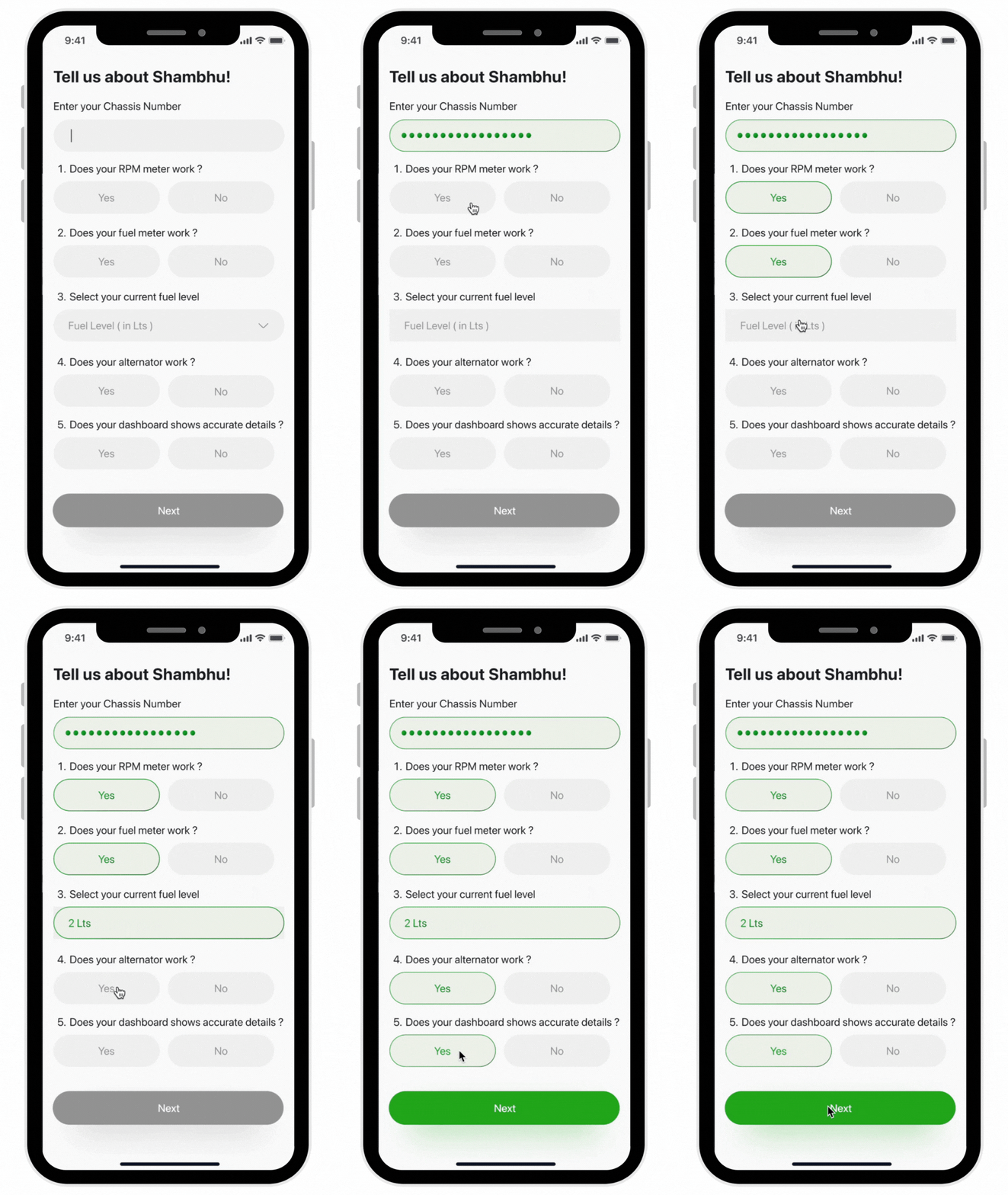
TELL US ABOUT TRACTOR
Karsandas then fills in the details about his tractor's health.
Reasons why the following parameters were shortlisted to check tractor's heath ⚡️
✅ Chassis Number: Unique identifier for registration and tracking.
✅ RPM Meter: Indicates engine performance and usage patterns.
✅ Fuel Meter: Ensures accurate fuel level monitoring for cost efficiency.
✅ Current Fuel Level: Initializes consistent tracking data.
✅ Alternator: Confirms power reliability for electrical components.
✅ Dashboard Accuracy: Ensures accurate operational data for safe and efficient driving.

.png)
Live Tracking Trips Accounts
Start
your Tractor
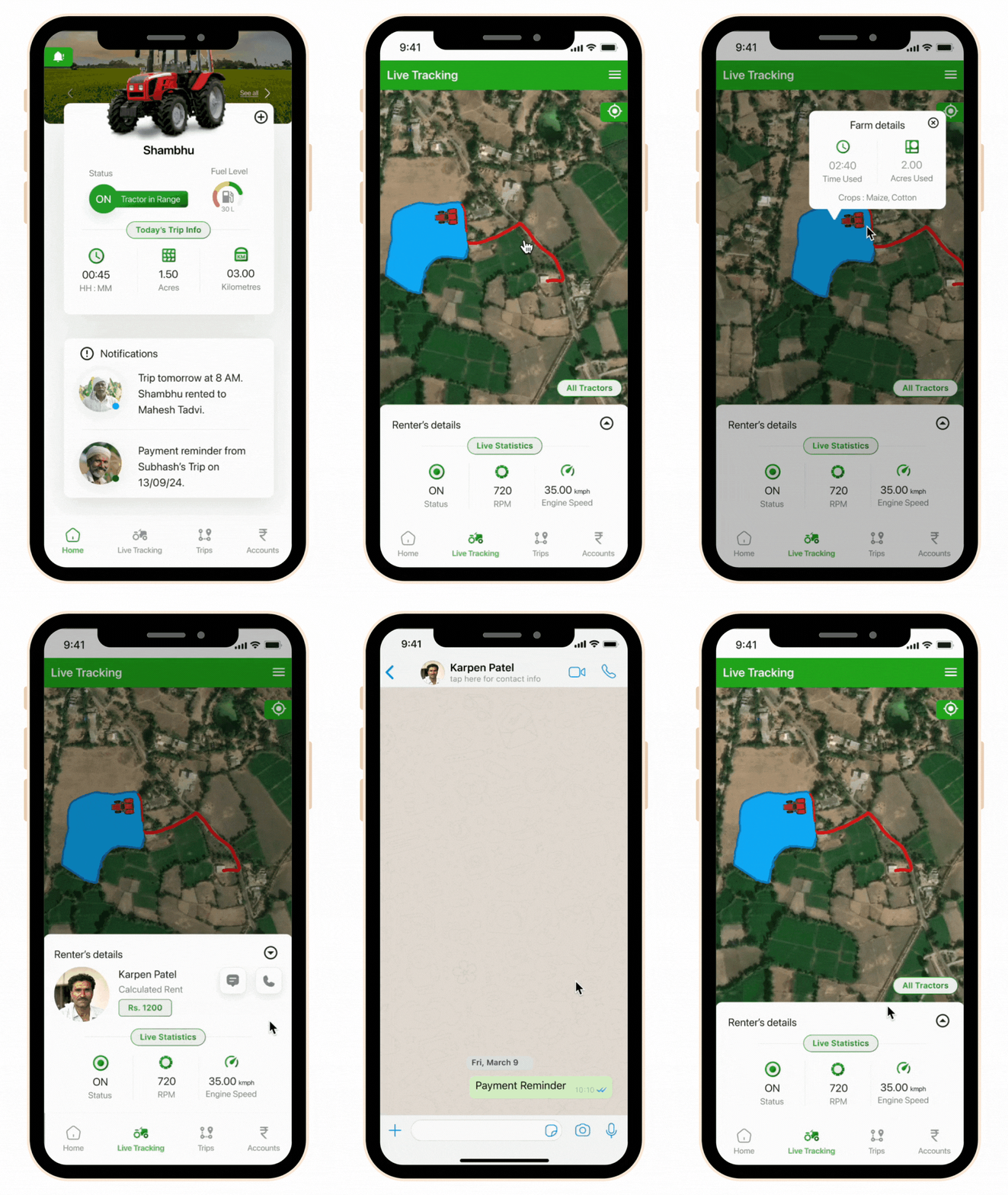
Karsandas rents out his tractor, Shambhu, and uses the Sarthi app to keep track. With live monitoring, he can:
Track Shambhu's real-time location.
View trip details like runtime, area covered, and distance traveled.
Monitor fuel level and get alerts on misuse.
Receive notifications about upcoming rentals.
Check health metrics for timely maintenance.
_edited_edited.png)
Alerts
Reminder Notifications
Live Metrics
Add new tractor
View all tractors
Monitoring
LIVE TRACKING
Ensuring Efficient
Tractor Operations
Through live tracking, Karsandas can:
Monitors Shambhu's current location and look at the details of work area.
Tracks real-time status updates such as RPM and engine speed.
Manages rental activities by directly contacting renters through the app.
Uses live statistics to optimize tractor usage & minimize idle time
TRIPS
Track, Replay, and Optimize
Every Trip with Ease!
Karsandas wants to check how Shambhu was used for the last rental job. He opens the "Trips" section of the Sarthi app and selects the specific date.
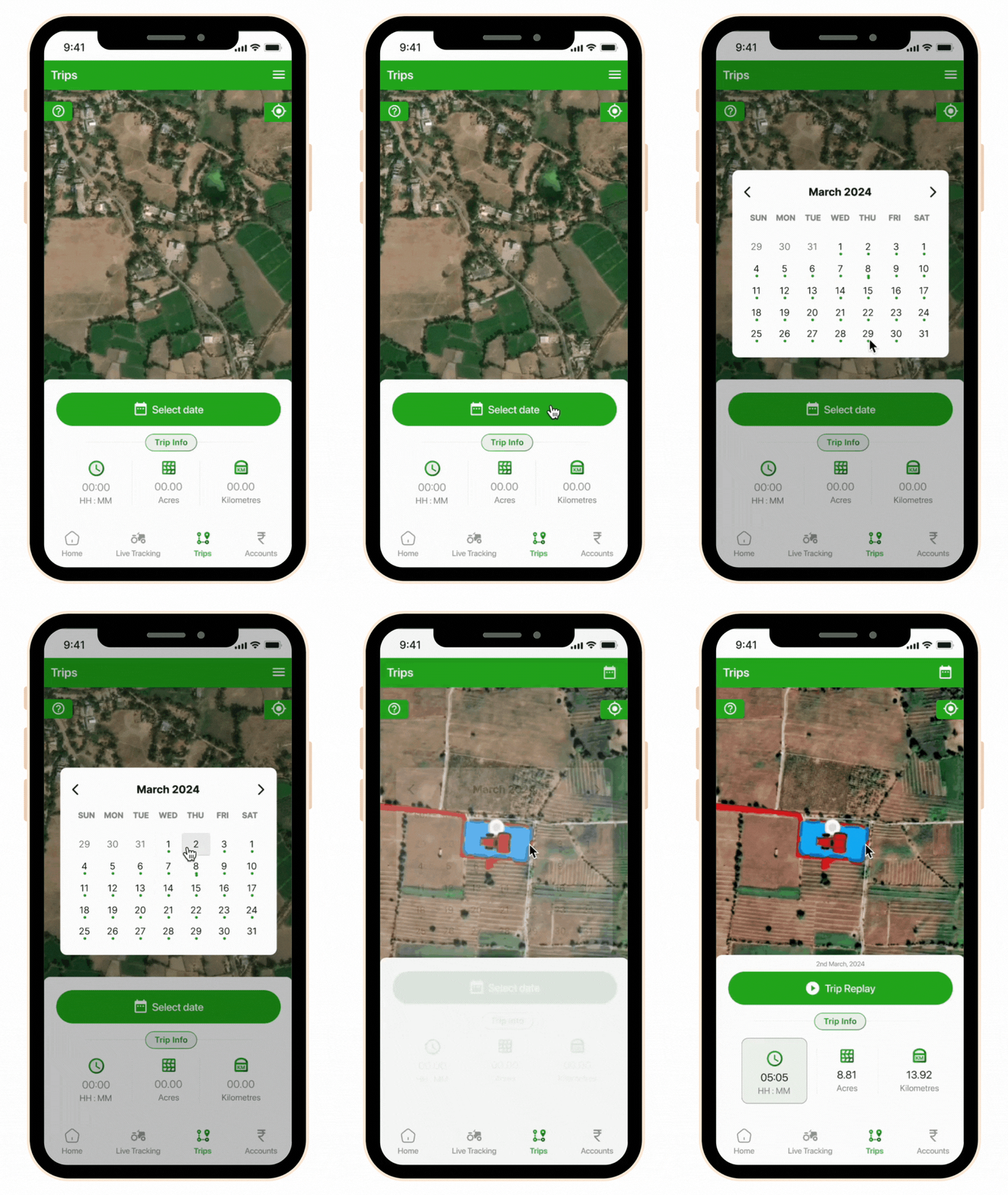
The dates marked with dots on calendar shows that tractor had worked that day.

He tracks tractor efficiency through work time, halt time, acres covered, and kilometers traveled to optimize productivity and schedule maintenance.
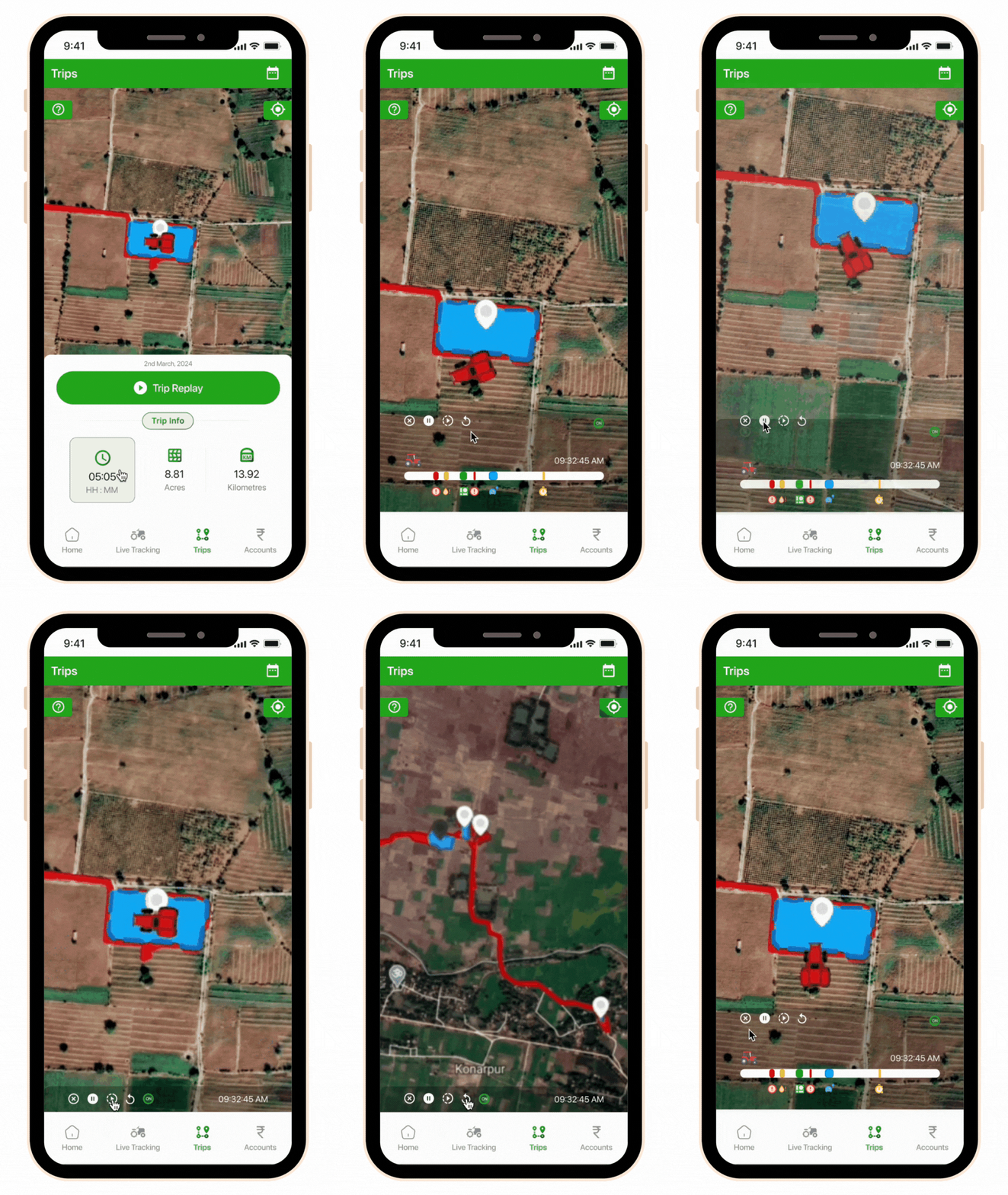
Pause, Forward, Replay Trips

Progress bar marked with color-coded indicators, each representing different events or alerts at different time stamps
ALERTS IN TRIPS
Karsandas uses Sarthi’s trip monitoring feature to track his tractor, Shambhu, during rental jobs. He replays the trip using the Trip Replay feature, pausing at important points using the Progress Bar
During replay, Rahul notices:

Overspeeding Alert (blue indicator) notifying him of excessive speed.
Diesel Theft Alert (red indicator) signaling possible fuel theft.
Fuel Refill Alert (orange indicator) showing fuel replenishment.
Farm Work in Progress (green indicator) shows the area worked on.
Tractor idle for a long time (yellow indicator)


.png)

.png)
.png)
ACCOUNTS
Track Every Rupee
Simplify Every Transaction!
Karsandas sees an overview of all his customers. He adds a customer, Rajesh Tank, from the list to review the outstanding amount.
He clicks on "Payment Left" to manually add a new payment that Rajesh owes for a recent service.
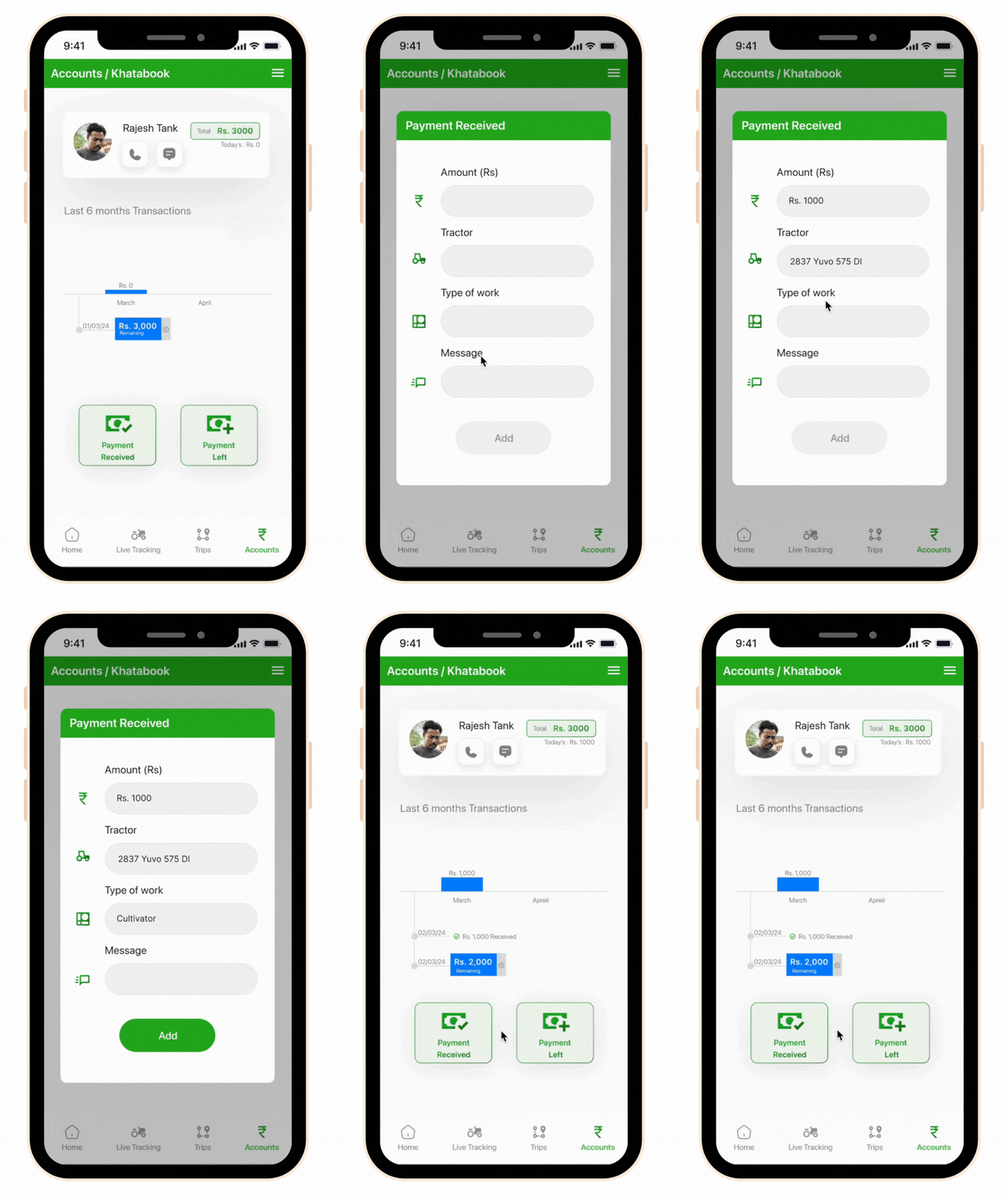
If there’s any delay or clarification required,Karsandas uses the "Call" or "Chat" buttons right on the customer profile to contact Rajesh instantly.
He checks the total balance for all his accounts, making sure he has a clear picture of the funds coming in and pending payments for the day.
Alerts
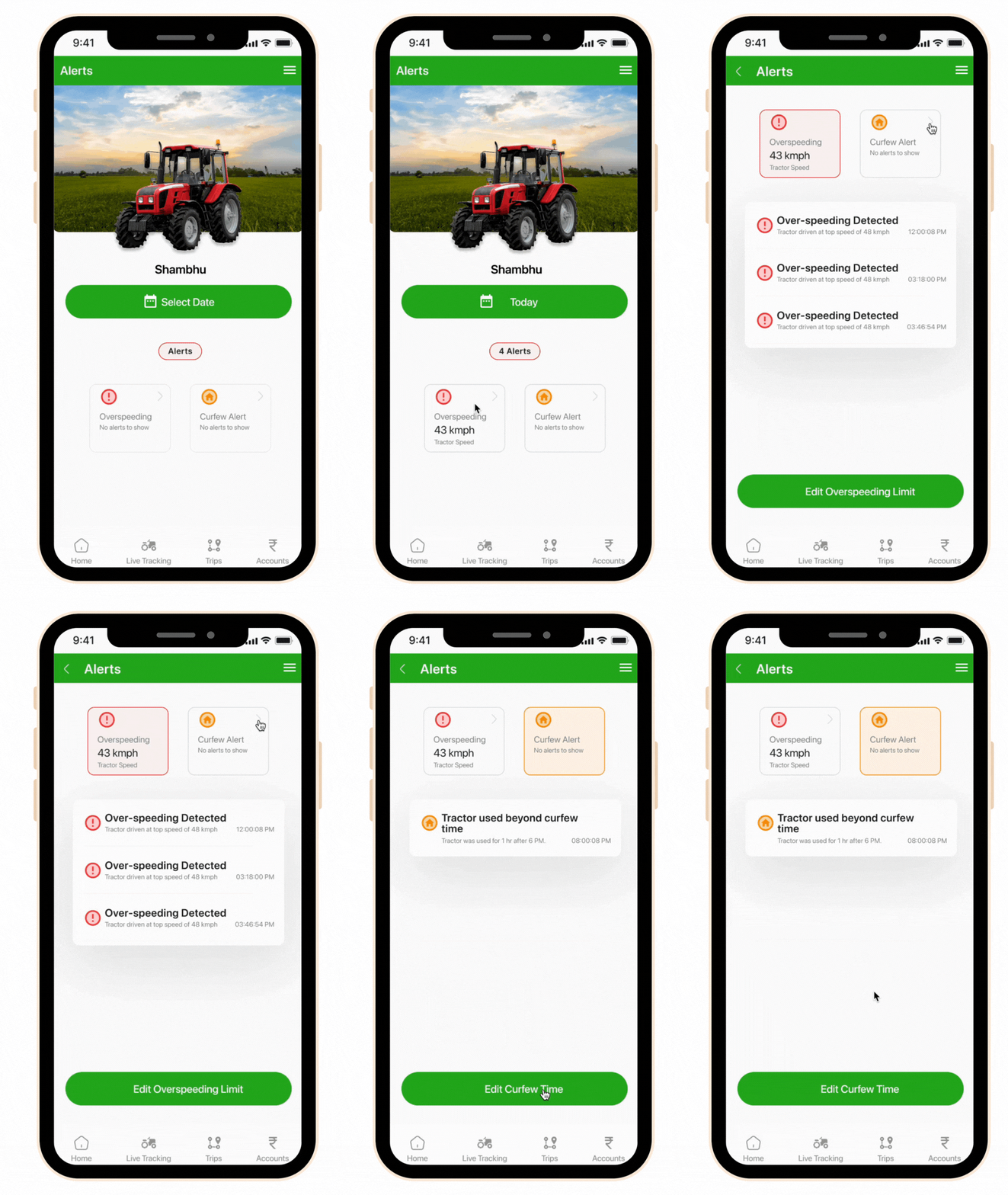
The app notifies him of events such as overspeeding or curfew violations, allowing him to manage risks and ensure safer operations.
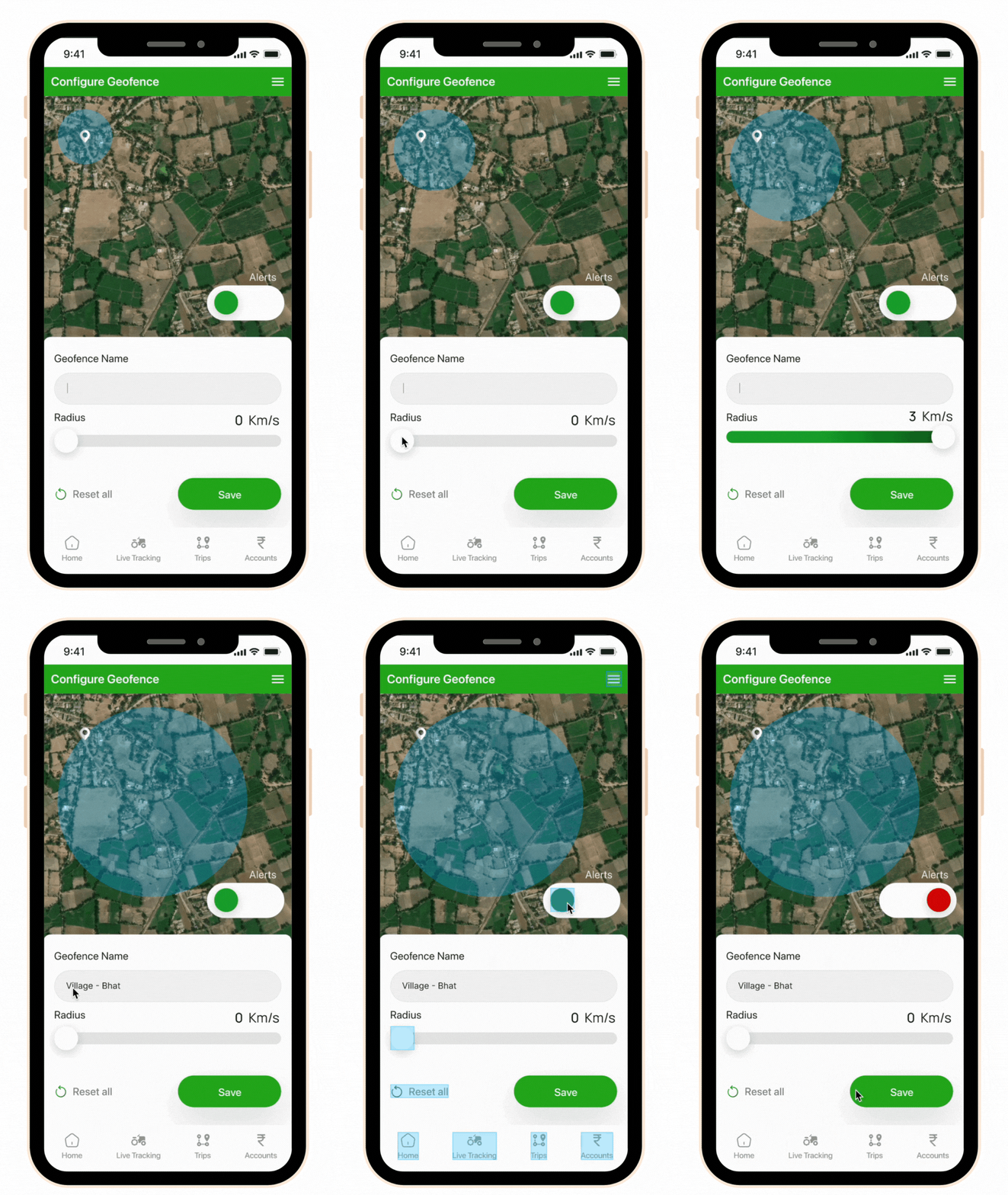
GeoFencing
He can also adjust geofencing which could give him alerts if the tractor moves out of the boundary.
Brand Identity
LOGO

.png)
LOGO CLEAR SPACE

LOGO MARK
.png)

COLOUR PALETTE

TEXT STYLES
Body 1
16 / 30
SF Pro Display Regular
Body 2
12 / 110
SF Pro Display Light
Heading 1
20 / 140
SF Pro Display Semi Bold
Heading 2
180 / 130
SF Pro Display Medium
Button Label
16 / 24
SF Pro Display Regular
Business Elements

PROBLEM
Significant portion of farmers lack access to farming equipment due to financial constraints. This technology gap greatly impacts farmers output and livelihood.
SOLUTION
We believe in providing a platform that enables Indian farmers with access to modern
agricultural equipment through an easy-to-use rental system but also integrates a comprehensive suite of services (education, operational etc.).
VALUE PROPOSITION
Agricultural Rentals:
Providing affordable, accessible, and reliable tractor and farming equipment rentals.
Agricultural Consultancy:
Offering expert advice on crop management, soil health, sustainable practices, and modern farming techniques.
Diversified Rental Use:
Expanding rental services for non-agricultural purposes such as construction, landscaping, and rural infrastructure
KEY RESOURCES
EXISTING ALTERNATIVES
Unorganized Rentals
Technological Infrastructure for the app and website.
Skilled Personnel including agricultural experts, maintenance teams, and customer support.
CHANNELS
Digital Platform: A user-friendly mobile app and website.
Offline Outreach: Collaborations with local agricultural offices, farmer cooperatives.
CUSTOMER SEGMENTS
Primary: Small and medium-scale farmers across India. Large agricultural businesses, contractors, rural entrepreneurs, local government bodies,
COST STRUCTURE
Capital Expenditure for app development, Initial Marketing & Reach-out expenses.
Operational Costs: Including staff salaries, app maintenance, and logistics. Educational and Community Initiatives For workshops, webinars, and rural development projects.
Rental Fees based on equipment type, duration, and seasonality.
(Future) Subscription Plans for long-term or frequent users.
REVENUE STREAMS
TESTING AND VALIDATING
Testimonials
We launched a pilot project in Sanand Village, Ahmedabad, to test our
affordable tractor rental service, analyzing costs and identifying customer
needs. During the pilot, we collected customer testimonials, which validated our
concept and provided essential insights for future growth.
"Something like Sarthi is much-needed relief from the monopoly of the rich farmers. The service is fantastic. However, there is always that question of sustainability. In September, we sow a variety of crops in Sanand Village, including cotton, soybeans, and groundnuts. What's can even more impressive if we can also rent out other farming tools. This can make our lives much more manageable. "
~ Amit Singh
"I had been struggling for years due to the monopoly of the wealthy farmers who controlled the tractor rental
market in our area. They charged exorbitant prices and often didn't provide the service on time. With Sarthi, I no longer will have to depend on the
whims of the rich landowners."
~ Rajesh Kumar
"This could potentially resolve one of my biggest issues that is farmers not returning my tractor on time, they wouldn't even show up on time, causing delays in my work. "
~ Miraj Hussain
"The payment history section could be improved, it is unclear which payments have been completed versus those that are pending, making it challenging to track my expenses accurately."
~ Ismail Sheikh
FUTURE SCOPE
Leveraging AI
for Sarthi
Predictive Maintenance
Dynamic Pricing
Usage Pattern Analysis
Route Optimization for Trip
Automated Record-Keeping
IMPACT
So what impact
would Sarthi create?
Empowerment Through Accessibility
Reducing dependence on wealthy landowners.
Data-Driven Decision Making
For maintenance, scheduling, operations
Streamlining Operations
Lowering costs and extending tractor lifespan
Enhanced Productivity
Tracking key metrics helps optimize efficiency
Enhanced Productivity
Tracking key metrics helps optimize efficiency
Community and Trust Building
Trust between tractor owners and renters, minimizing conflicts.
Stress Reduction and Peace of Mind
By monitoring each and every step
Increased Digital Literacy
Enhancing tech literacy and creating new opportunities.
Environmental Impact
Efficient usage tracking promotes sustainability
Scalable Impact
A replicable model that can improve resource access and impact farmers nationwide.
LIMITATIONS
So where does
Sarthi lack?
Digital Literacy Barrier: Many farmers may struggle to use the app effectively due to low digital literacy, limiting the adoption of Sarthi’s features.
Hardware Costs: The initial cost of the IoT smart kit might be a barrier for farmers with limited financial resources, impacting adoption rates.
Resistance to Change: Farmers used to traditional rental methods may be hesitant to adopt a digital platform, resulting in slower user onboarding.
Dependence on Technology: Hardware malfunctions or technical glitches in the IoT smart kit or app can disrupt operations and cause delays in accessing real-time data.
Trust in Data: Convincing farmers to trust the data insights provided by the system could be challenging, especially when conflicting with their own experience or practices.
TAKEAWAYS
So what did I learn?
The wins. Understanding user needs through empathy allowed us to tackle affordability and usability challenges for small farmers, leading to impactful solutions. Hyper-localization, by adapting the app to various languages and cultures, improved engagement and user adoption in rural areas. We designed a simplified user experience for varying digital literacy, encouraging more farmers to use the platform. Trust and transparency in payment processes fostered confidence, vital for financial transactions, while consistent support helped overcome adoption barriers, enhancing technology uptake in underserved communities.
The fails.
We faced challenges in understanding user needs, as our initial affordability solutions didn't fully address farmers' concerns. Despite our focus on localization, gaps in dialect coverage limited access and engagement with the app. While the simplified user experience worked for many, further interface simplification was needed, particularly for users unfamiliar with digital tools. Additionally, inadequate visual cues in financial processes created confusion, and overcoming adoption barriers required more extensive onboarding efforts than expected, hindering quick service scaling.
And that’s all from our side.
Thanks for checking this out.